


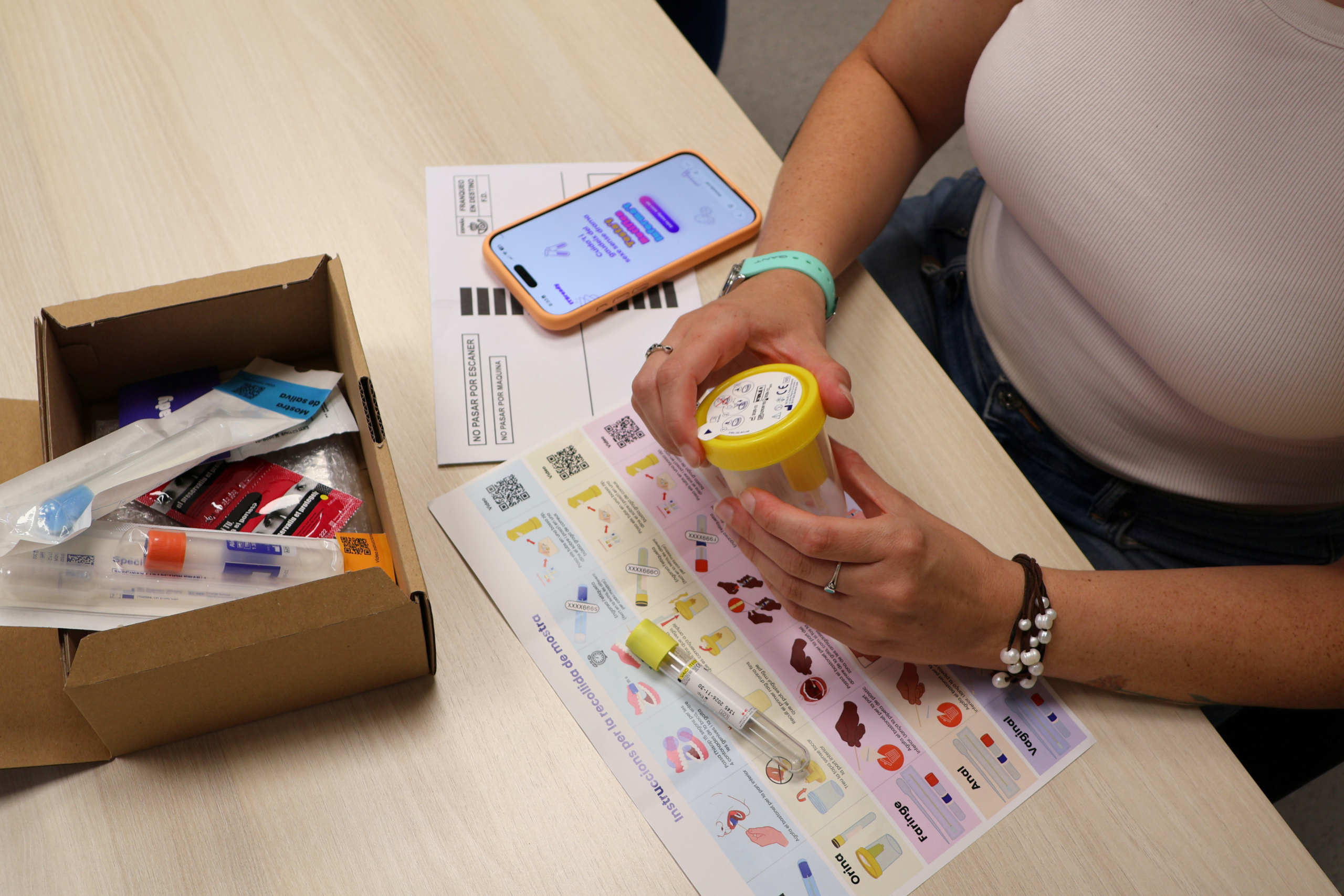
Sexually transmitted infections (STIs) continue to represent a significant public health challenge. In recent years, Catalonia has recorded a steady increase in diagnoses, particularly among young people, highlighting the need for new strategies in prevention, early diagnosis and sexual health promotion that are tailored to their habits and needs.
In this context, ITSready has been launched, a pioneering research and innovation project in Catalonia and Spain that is developing three digital tools designed to improve knowledge of STIs and facilitate access to diagnosis among young people aged 16 to 25 across Catalonia.
The project is funded by La Marató de 3Cat and jointly led by the Fight Infections Foundation; the Centre for Epidemiological Studies on STIs and HIV/AIDS in Catalonia (CEEISCAT) – a research group within the Germans Trias i Pujol Research Institute (IGTP) and affiliated with the Public Health Secretariat of the Department of Health; the Barcelona Public Health Agency (ASPB); and the Young People’s Centre for Sexualities (CJAS). The project also involves the Microbiology Department of Germans Trias i Pujol University Hospital.
“With ITSready, we aim to bring diagnosis and information closer to the digital spaces that already form part of young people’s everyday lives, by offering accessible, confidential and evidence-based tools,” explains Cristina Agustí, Principal Investigator of the project and epidemiologist at CEEISCAT-IGTP.
ITSready: three tools bringing sexual health closer to young people
Testa’t Jove
Testa’t Jove offers the opportunity to request a free self-sampling kit tailored to each person’s sexual practices. Participants receive the kit at home or at a collection point, send their samples to the reference laboratory and access their results confidentially through the platform.
Notifica
Notifica makes it possible to anonymously inform sexual partners of a potential STI exposure following a positive diagnosis, promoting early diagnosis and helping to interrupt transmission chains.
“Chlamydia and gonorrhoea are infections that often cause no symptoms. As a result, many people may not realise they are infected and can unknowingly pass them on. Facilitating early diagnosis and partner notification is essential to interrupt transmission chains, prevent complications and protect sexual health,” explains Lucía Bailón, researcher at the Fight Infections Foundation.
Informa’t
Informa’t is a chatbot that provides reliable, validated information on sexuality, STIs and prevention using language tailored to the needs of young people.
“More and more young people seek information about sexuality and STIs online or through artificial intelligence tools. With Informa’t, we want that information to be rigorous, up to date and validated by healthcare professionals, because making informed decisions is also a form of prevention,” explains Cristina Rius, Head of the Epidemiology Service at the Barcelona Public Health Agency.
“Even today, talking about STIs can still generate shame, guilt or fear. If we want to guarantee young people’s sexual rights, we must bring services to where they are, through accessible, confidential and non-judgemental tools,” highlights Jordi Baroja, Director of the Young People’s Centre for Sexualities.
Testa’t Jove aims to distribute 1,500 self-sampling kits
The project plans to distribute 1,500 free self-sampling kits among young people aged 16 to 25 living in Catalonia.
The first data obtained during the pilot phase already point to the potential of this model to reach people who do not usually access conventional diagnostic services. Almost half of participants (41.9%) had never previously taken an STI test, demonstrating the ability of this type of intervention to reduce barriers to screening.
If the results confirm its effectiveness, ITSready could become a reference model for expanding this type of digital intervention to other regions and population groups.
Share