


A new national scientific project is studying the use of an innovative quantitative PCR technique (RT-qPCR), more accurate than conventional methods, to improve the diagnosis of aspergillosis and mucormycosis. These are fungal infections associated with mortality rates exceeding 50% in immunocompromised patients, those with weakened immune systems.
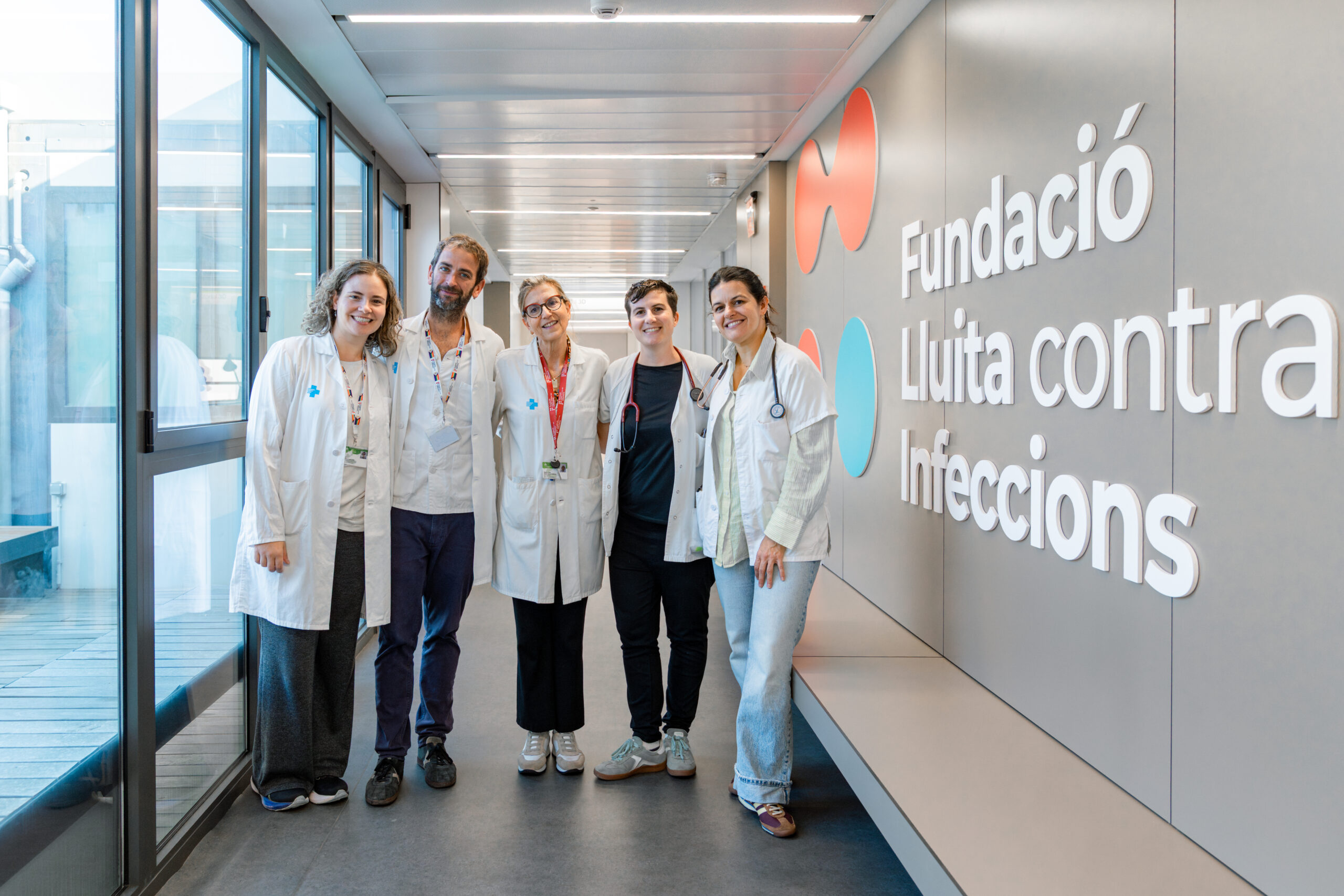
The study, entitled ‘Uso de MycoGENIE® RT-qPCR para el Diagnóstico de Mucormicosis en Pacientes de Alto Riesgo: Estudio Multicéntrico Prospectivo en España’, is led by Dr Pedro Puerta, Director of the Infections in Immunocompromised People programme at the Fight Against Infections Foundation and Hospital Germans Trias i Pujol, together with Dr Alfredo Maldonado from Hospital Universitario La Paz,
in collaboration with the Microbiology Department at Hospital Germans Trias. The project is funded by the Spanish Society of Infectious Diseases and Clinical Microbiology (SEIMC), and work is currently underway to optimise all processes ahead of recruiting the first patients.
Diagnosing earlier, key to improving outcomes
Invasive fungal infections, such as aspergillosis and mucormycosis, mainly affect immunocompromised or high‑risk individuals, including patients with blood cancers, transplant recipients and those admitted to intensive care units. Although these infections primarily affect the lungs, they can spread to other organs, such as the brain. In such cases, early detection is crucial, as delayed diagnosis significantly increases mortality.
For this reason, the study aims to evaluate the effectiveness of a new quantitative PCR test, MycoGENIE® RT-qPCR, as a tool to support early diagnosis of aspergillosis and mucormycosis. Currently, diagnosis relies on a combination of clinical, radiological and microbiological tests, such as bronchoscopies, which often have limited sensitivity and can be invasive. In this regard, “the incorporation of a rapid molecular technique could significantly enhance our diagnostic capacity and enable earlier clinical decision-making, a key factor in this type of infection,” explains Dr Puerta.
The project plans to distribute the MycoGENIE® RT-qPCR test to several hospitals across the country, which will be responsible for identifying and enrolling patients with suspected invasive fungal infections.
If successful, thousands of people in Spain could benefit
The project will run for two years and, if expectations are met, the first results could be available in 2028. The data obtained will make it possible to assess the role of this new PCR test in early diagnosis and, if proven effective, it is estimated that thousands of patients in Spain could benefit.
With this study, researchers aim to move towards a more precise approach to the management of severe fungal infections, improving survival opportunities for a particularly vulnerable group.
Share